Who decides what goes on our supermarket shelves?
16 Nov 2026
Clemmie takes us behind the scenes of her weekly shop at Sainsbury’s, and the questions she posed to the company’s leaders at their Annual General Meeting
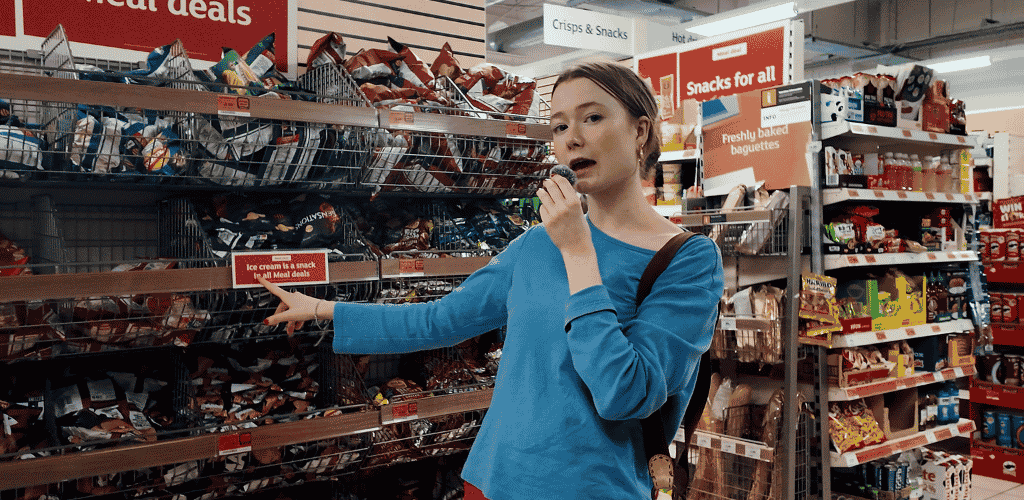
Walking into my university supermarket, I am immediately greeted by a bombardment of junk food. A sea of energy drinks, a cupboard stuffed with doughnuts and a wall of sweets and chocolate so bright it could give you a headache. For a student rushing between lectures, hungry and budget conscious, it’s hard to ignore the unhealthy products that are promoted the hardest.
During my weekly shop in the summer, I couldn't help noticing the World Cup promotions. I must admit that Jude Bellingham’s face on a Lucozade bottle caught my attention, and ‘Bangers and Mash’ flavoured crisps looked intriguing (if not disgusting). When I opened the Sainsbury's app, I saw more of the same: sponsored promotions from Coca-Cola, Powerade and McVitie's.
As a young person, and a budget conscious student, these promotions worked in making me notice them. But that is exactly the problem.
These promotions consistently put less healthy products centre stage. They make junk food and sugary drinks feel exciting, relevant and part of the culture that connects young people, both in store and across the digital platforms we use every day.
Later that day, I was scrolling through Instagram looking for a bit of inspiration, and the Sainsbury's "May Favourites" post was packed with ice lollies, crisps, cookie dough, cheesy dip and ice cream sundaes — each one marked with red traffic labels, showing high contents of sugar, fat or salt. What struck me was the gap between social media and what I'd actually seen on my own app: fruit and veg are among the products I buy most, yet they never get that same exciting spotlight online.
At school, my class once debated which supermarket we would all be. Tesco was pragmatic and reliable, Asda was no nonsense and Waitrose was posh. It was a silly game, but it reflects how entrenched supermarkets are in British life. If we are serious about improving young people’s food environments, supermarkets have to be part of the conversation.
This is why myself and Estel were super excited to attend Sainsbury’s and Tesco’s AGMs to ask the Boards what they're doing to help protect young people’s health.
I have to admit, I was nervous before attending the AGM. The idea of standing up in a room full of business bigwigs, senior executives and investors was intimidating. However, once I arrived my nerves started to disappear. The questions ranged from serious questions on business strategy to one shareholder producing an egg box to ask why blue eggs weren’t being sold. Seeing the variation in the room made me realise my question was worthy of being asked.
When I stood up to speak, I felt unexpectedly powerful. I was the youngest person in the room by at least ten years but age did not make me feel less credible. Instead, I felt that my age brought intrigue and the shareholders were interested in hearing what I had to say.
Attending the AGM felt different to our normal methods of campaigning. To attend an AGM, you must own a stake in the business or like me, be lent a pass by someone who does. This meant instead of standing outside and asking the business to listen, we could question the leadership directly and make the board members listen to the young people affected by the decisions they make.
With 1 in 3 children now at risk of future food-related ill health, supermarkets definitely have an important role to play. According to research by Nesta, if supermarkets meet the proposed mandatory healthy sales target it could result in 400,000 fewer children living with food-related ill health within 5 years.
Supermarkets have enormous influence over what children and families see, want and buy - not just on supermarket shelves, but through loyalty schemes, apps and social media. Why can’t they use this influence to promote what’s good for us?
Attending the AGM was our chance to put this question to the top dogs. But it was only the start. Now we need supermarkets to give the same shelf space, apply the same promotional power and extend the same discounts to healthier options.
I hope that supermarkets will use their immense power in a positive way by collaborating with us to make the changes we desperately need.

Why are AGMs important?
Decisions that shape our food environment are made behind closed doors in the boardrooms of Big Food businesses.