Behind the scenes of Bite Back’s research: An Exclusive
09 Nov 2026
Research Manager Caitlin takes us through our biggest projects, and why having young people at the centre and forefront of research matters when making change.
Something powerful happens when young people’s real stories are backed by evidence.
Young people have been saying for years that their school food is not doing its job. Rather than fueling them through challenging lessons, many young people experience the food on offer in their canteen as unhealthy and unappealing.
Their stories should be enough to spark change. But when that isn’t the case, we look to the evidence.
At Bite Back, we had a hunch that school meals in secondary schools across England were often non-compliant with the 2014 School Food Standards (SFS). We hear all the time about sausage rolls and chips being on offer daily. But there were no large studies to confirm whether or not this was true. So we set out to fix that.
We looked at the break and lunch menus posted online for a random sample of 500 secondary schools across England. Then, we developed a coding pipeline that could use AI to scan each menu for breaches of the SFS.
What we found was shocking.
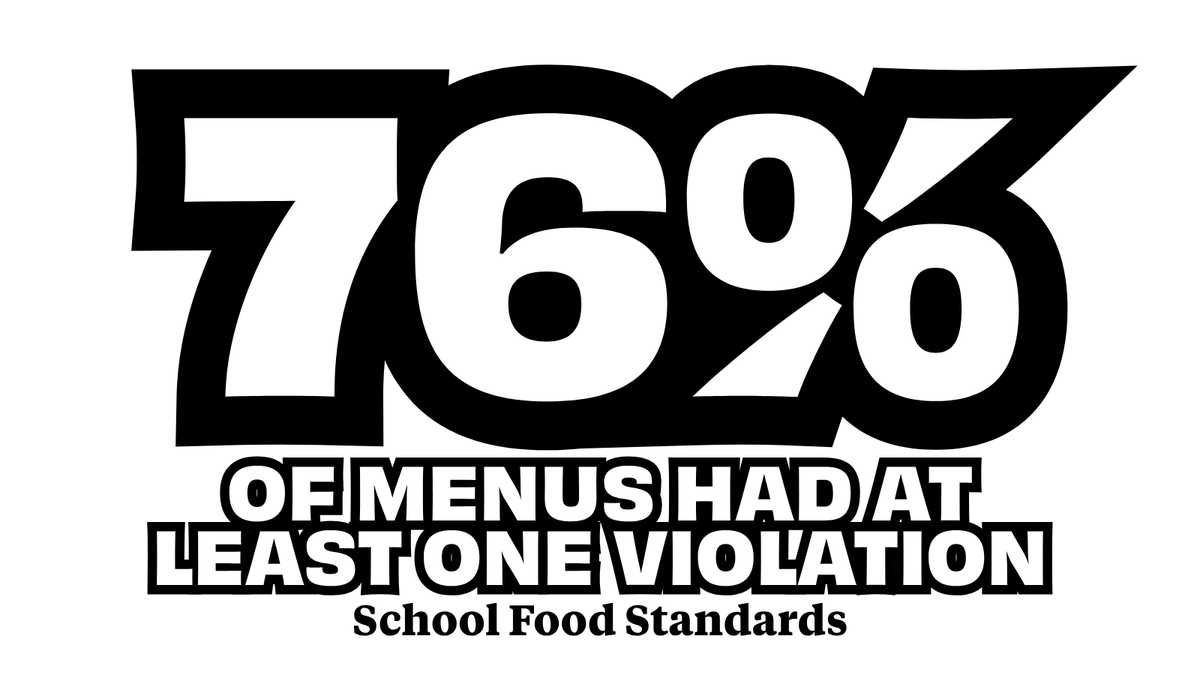
The situation was so much worse than what stories alone suggested – 76% of menus had at least one confirmed violation!
After seeing our research on the front page of the Guardian, people all across the country wanted to know more about the experience of young people in schools. This really got the attention of policymakers. And luckily, they listened.
This September, we celebrated the expansion of Free School Meals and welcomed the update to the SFS from 2027.
But the job isn’t done – we’ll continue using stories and evidence to make sure the Government acts on its promise to implement a monitoring and compliance mechanism, so that the next time we do this research, the evidence shows that lunch menus support health.
And evidence doesn’t just back the stories of young people – it can also help to amplify their voice. Our outdoor advertising research did just that in 2025 when Bite Back launched its award-winning #CommercialBreak campaign.
Our research found that big food brands were quite literally flooding our streets with junk food adverts and that those living in the most deprived areas were disproportionately impacted. Bite Back youth campaigners were furious to find out that the rate of junk food adverts is more than six times greater in the most deprived areas, compared to the least.
So what did we do about it?
We placed 365 billboards across Lambeth and Southwark with the clear message: “We’ve bought this ad space so the junk food giants couldn’t – we’re giving kids a commercial break.”
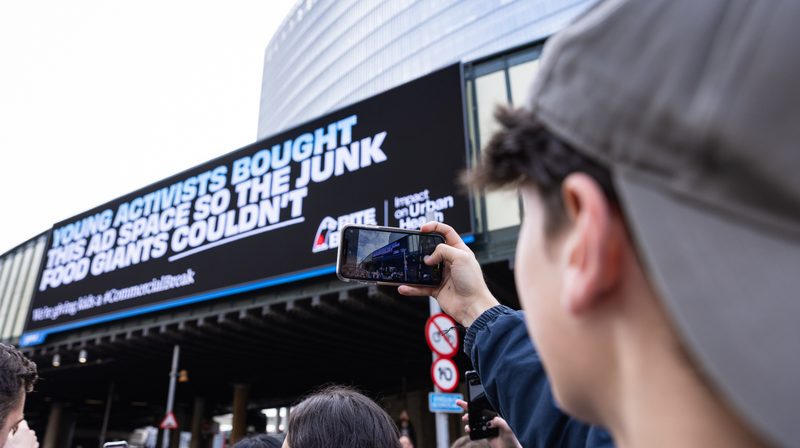
As you can imagine, the campaign invited pushback from major advertisers like Global and JCDecaux. But they were too late – our message, combining stories and evidence, had landed.
In my nearly 3 years as Bite Back’s Research Manager, I’ve learned that research is absolutely essential to securing policy wins that protect child health. When done in collaboration with young people, research has the potential to change the food system. But it needs to be paired with storytelling and thoughtful, creative campaigns. That’s what Bite Back does so brilliantly.
Academics and policymakers are up against an industry that floods millions of pounds into making sure their products stay front and centre in the lives of young people. Big food is brilliant at innovating – both what they sell and how they market it. How many people in politics know that McDonald’s uses Snapchat to directly communicate with young people, that Pizza Hut has an official branded experience on Roblox or that KFC developed its own gaming console with a chicken chamber?
Young people’s shared lived experience is the key to exposing these always-evolving tactics. My job as a researcher is to listen and back those stories so that together, we can change the food system to one that protects and promotes child health over profit.
Big food businesses prioritise understanding young people. Researchers and policymakers need to do the same.
Written by Caitlin Mahoney, Research Manager
Caitlin leads Bite Back's research work, collaborating with our young activists to learn more about the issues they experience everyday. She has seen the impact of unhealthy food environments first-hand from her work as a paediatric nurse in the US, and on global food security at the World Food Programme.
“Right now, our food system is designed to produce the most food possible at the cheapest cost possible. This means that the profits of big food companies are prioritised over children's health.”
