Big Food in Schools: Research & Findings
Healthy school food should be a given. But right now, the system in England is letting young people down. And no one is being held responsible.
This research brings together data from school menus, sector experts and over 2,000 students to uncover what’s really happening in school canteens across England.
It comes at a critical moment. As the government reviews English school food standards, there is a once in a generation opportunity to fix the system and protect children’s health and futures.
This page sets out the evidence behind the campaign: what’s going wrong, why it matters, and what needs to change.
KEY FINDINGS
UNHEALTHY GRAB-AND-GO ITEMS DOMINATE ENGLISH SCHOOL FOOD
Grab-and-go food now makes up a major part of what students eat, but it is often low in nutrition and replacing proper meals.
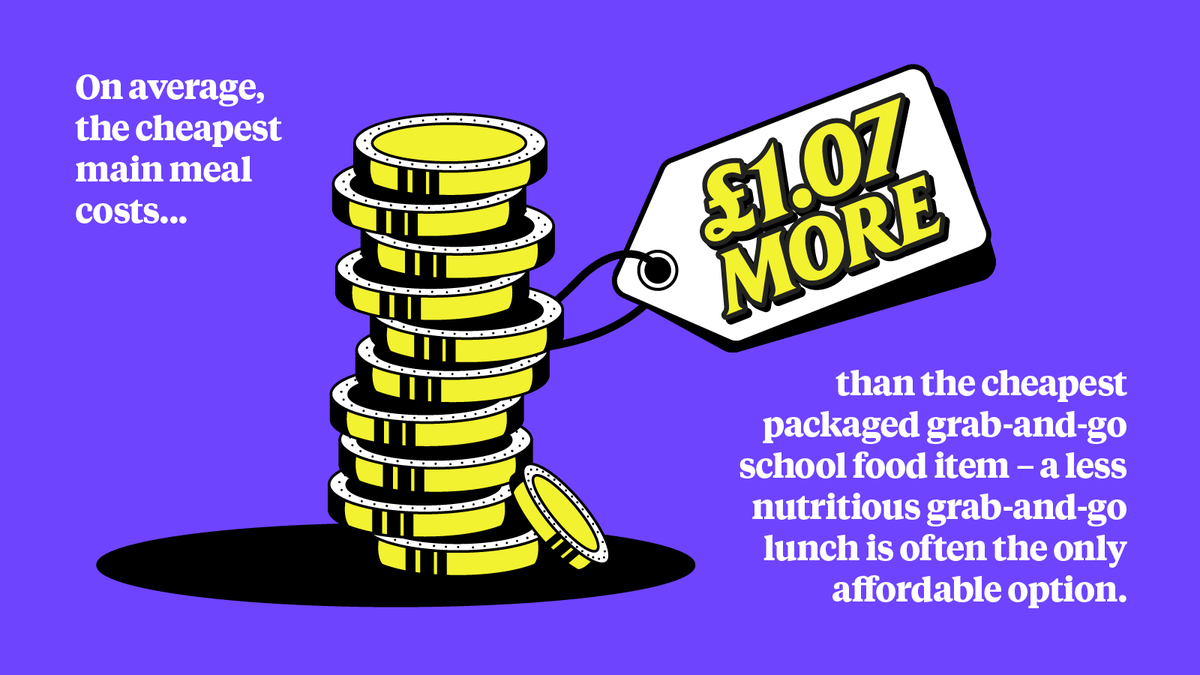
Students are increasingly relying on quick, cheap options like pizza, pastries and sugary drinks, which are widely available and often more affordable than balanced meals.
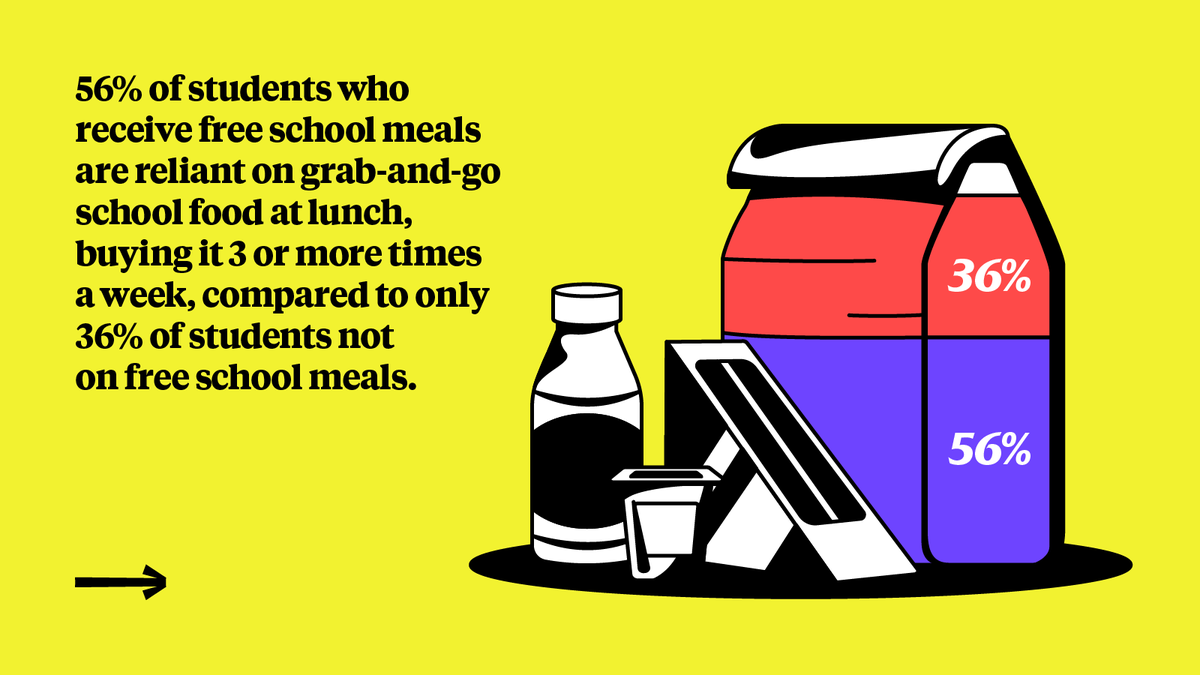
- 60% of students buy grab-and-go at least once a week
- 40% buy it 3 - 4 times per week at lunch
Commercial pressures are shaping what’s on offer
English school food is being influenced by a system that prioritises profit, not student health.
Suppliers and caterers are incentivised to sell high margin, low cost items. This is reinforced by branding, promotions, and a growing market targeting schools.
This means:
- Cheaper, less nutritious food is prioritised
- Schools operate more like marketplaces
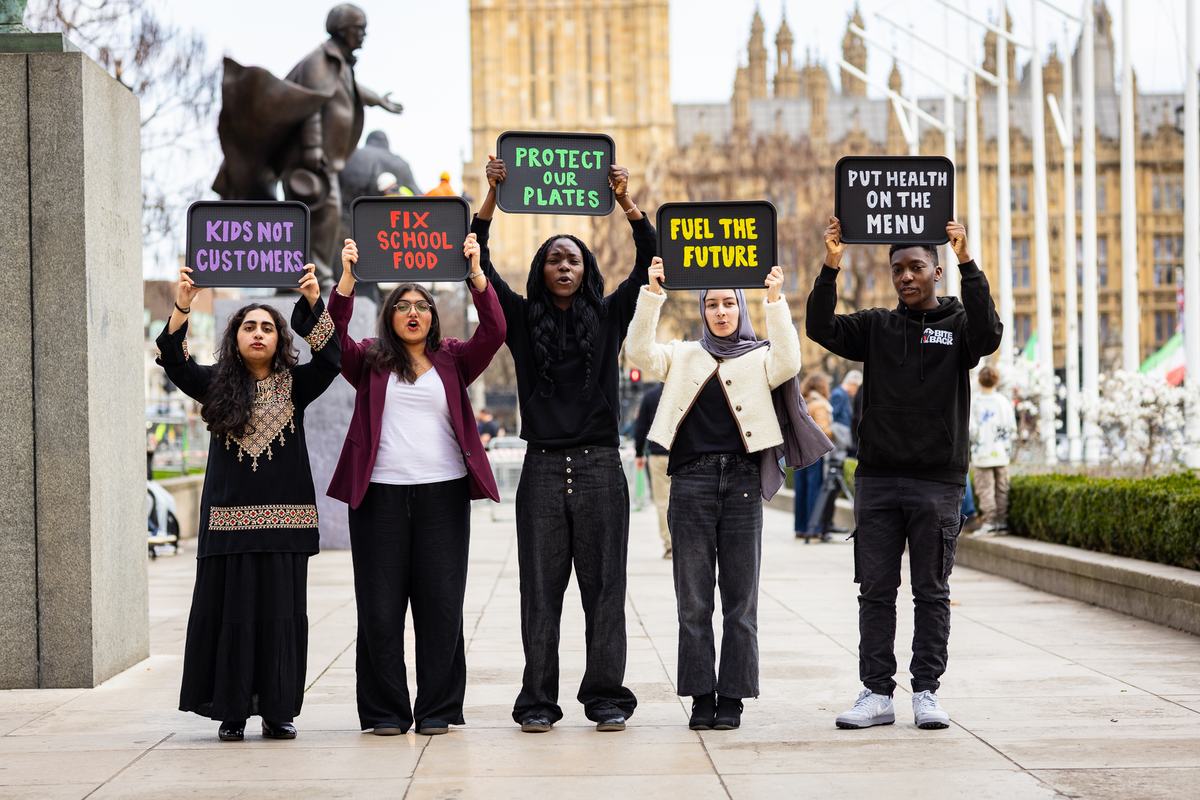
- Students are treated like customers, not children
There is little monitoring or accountability
There is no consistent system ensuring English schools meet food standards across the day.
Responsibility for enforcing the English school food standards is unclear, meaning non compliant food regularly slips through.
- Some schools show compliance as low as 25%
- No school in one assessment was fully compliant
Young people are being let down by the system
Students in England say school food is not meeting their needs, and their voices are often ignored.
Many report feeling hungry, tired, and unable to concentrate after eating grab-and-go options.
- Only 1 in 3 students say grab-and-go school food gives them enough energy
- 24% say it doesn’t meet their dietary or cultural needs
Young people are clear: they want healthier, affordable, and more diverse food and a say in decisions.

How we conducted this research
Approach
A mixed methods approach combining:
- Student surveys
- Focus groups
- Menu pricing analysis
- Stakeholder interviews
Sample Size
- 1,899 secondary school students surveyed
- 50 schools across England
- 24 students in focus groups
Data Sources
- School menu analysis (16 schools)
- Interviews with caterers, suppliers, and school staff
- Additional academic research datasets
Limitations
- Sample not fully nationally representative
- Self-reported survey data
- Limited supplier-side input
Despite this, consistent patterns across methods strengthen confidence in findings.
CAMPAIGN CONTEXT
This research shows. School food is shaped by a system that prioritises convenience and profit, not young people’s health.
But it also shows something else: change is possible and urgently needed.
With the government reviewing school food right now, this is a critical opportunity to:
- strengthen standards
- improve enforcement
- ensure every child has access to food that helps them learn and thrive